Artist bio
Title
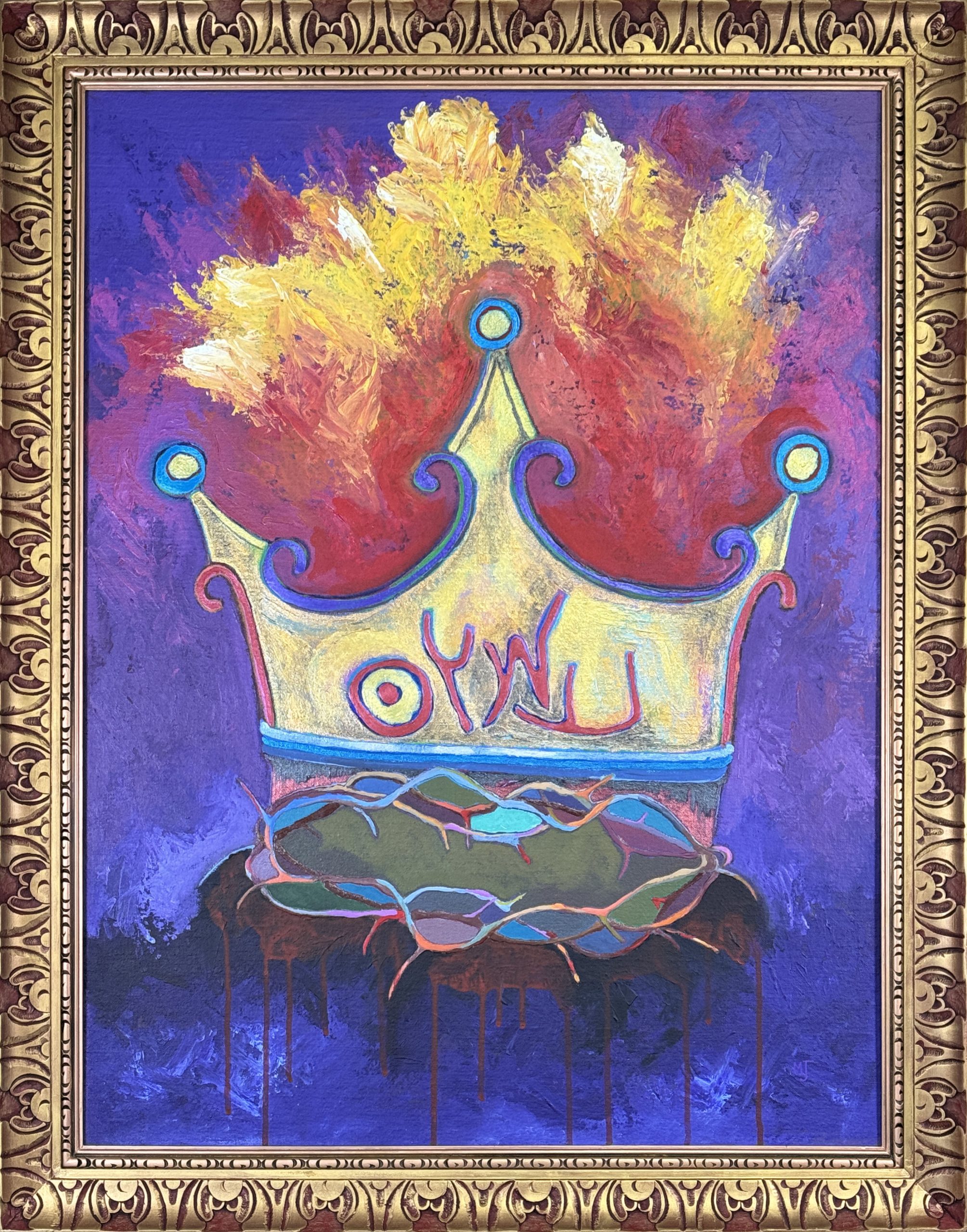
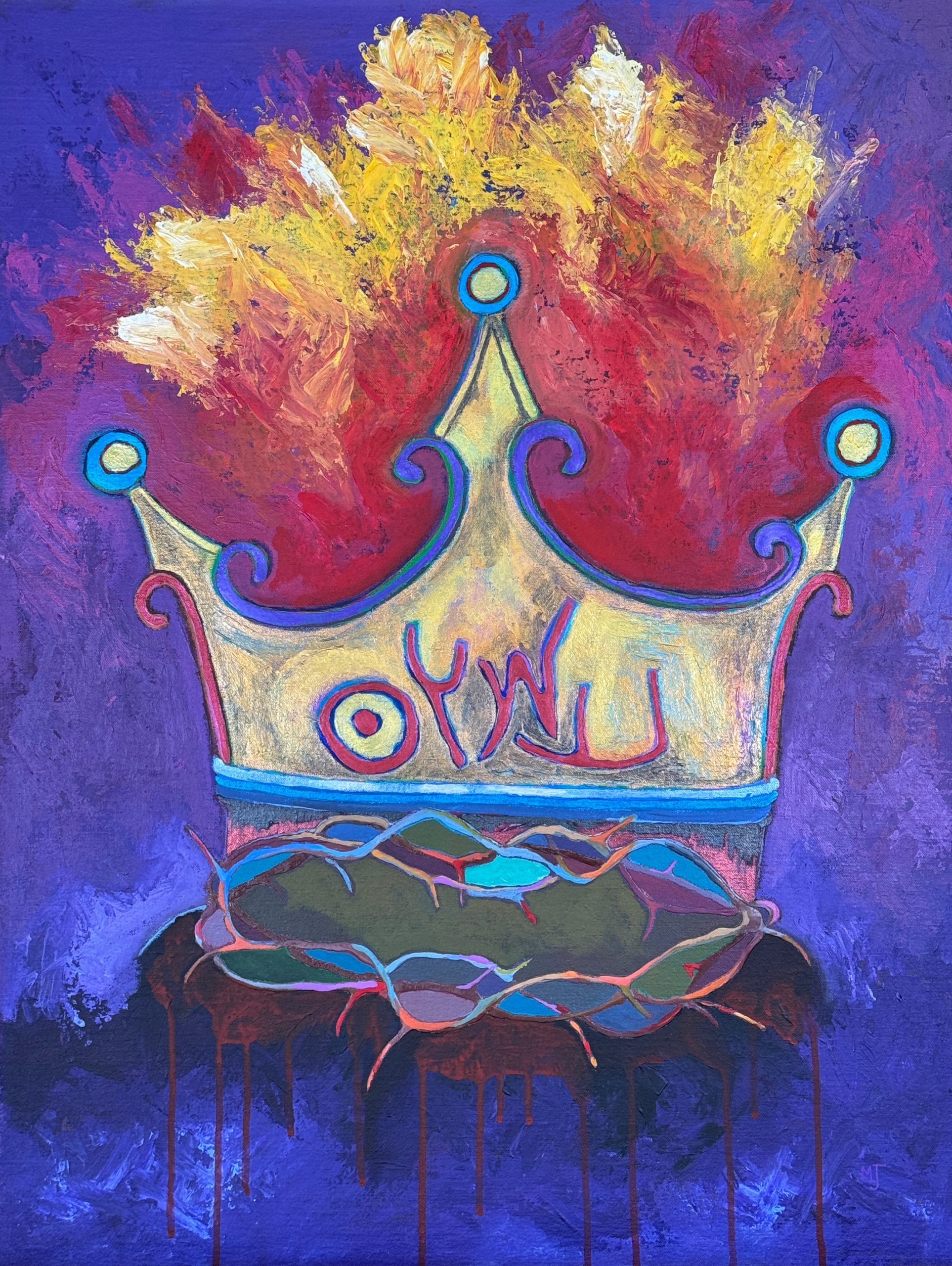
Crown Him with Many Crown
Medium/Genre
PaintingArtist Statement
I work primarily in acrylics, drawn to the expressive power of color and its ability to communicate beyond words. Color, for me, is not merely decorative but structural—carrying emotion, tension, and meaning within the composition.
The foundation of my work is the Ancient (Paleo) Hebrew pictographic language, where each letter functions as a small image rather than an abstract symbol. These ancient forms carry layered meaning and reflect a worldview in which language, image, and story are inseparable. In my paintings, I weave these pictographs into fields of bold color and texture, allowing language to emerge visually rather than textually.
In the spirit of Emily Dickinson’s “Tell the truth but tell it slant,” Paleo Hebrew operates as a slanted language by nature. Its unfamiliar forms resist immediate understanding and instead invite discovery. The painting, "Crown Him with Many Crowns," approaches Christ’s identity indirectly, through paradox rather than depiction. Two crowns occupy the space: one of thorns, rendered in muted tones and marked by sacrifice; the other elevated, luminous, and suggestive of sovereignty. The tension between suffering and kingship is left unresolved, asking the viewer to dwell within it.
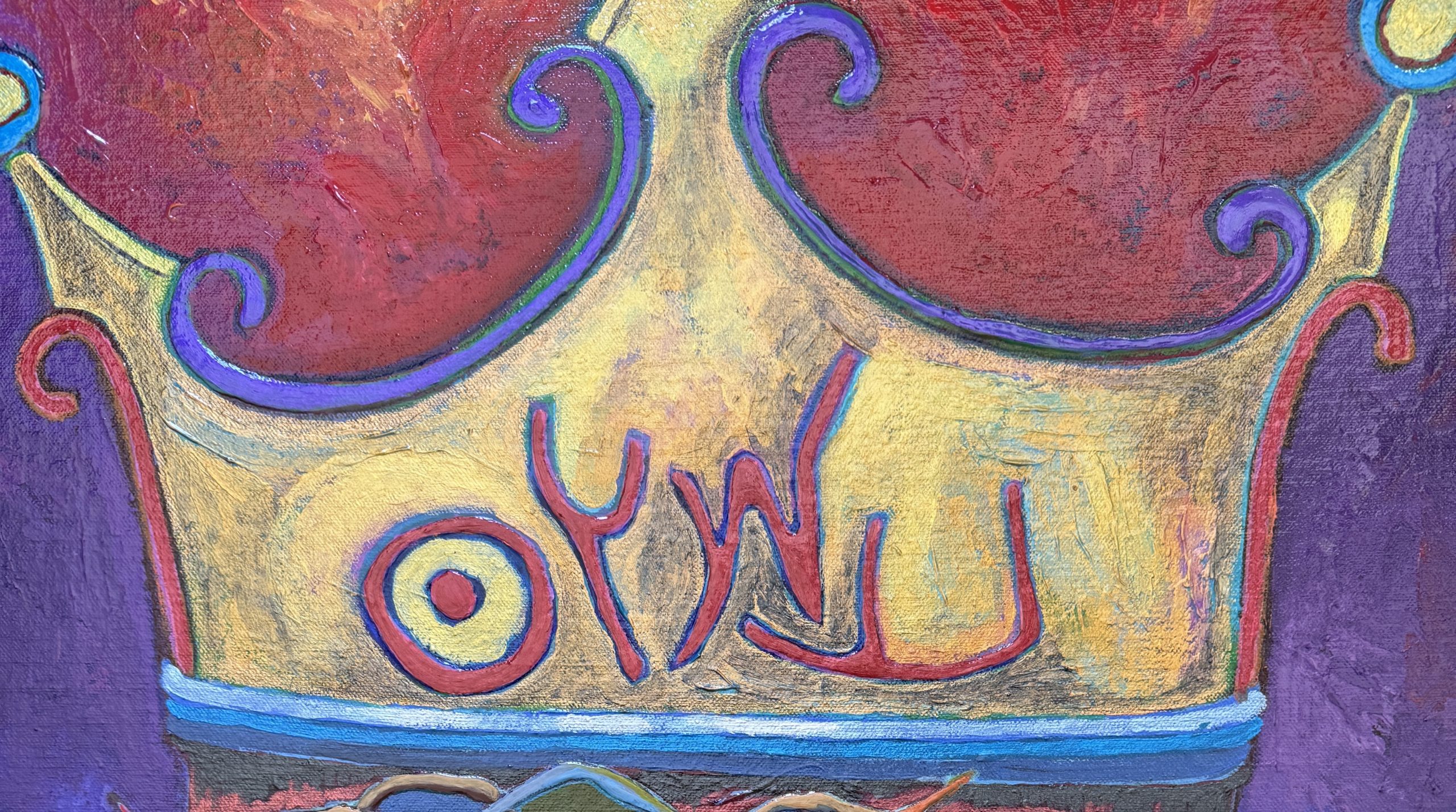
Embedded within the work are Paleo Hebrew pictographs spelling "Yeshua"—not as readable text, but as visual language which often surprises viewers who realize the letters themselves tell a story. Layers of symbol, color, and form unfold slowly, encouraging contemplation rather than conclusion.
While the work may first be encountered through its visual beauty, my hope is that it invites deeper engagement—creating space where faith, history, and art intersect, and where ancient words speak again through living color.
How it fits into contest
Scripture does not present Christ first as suffering and later as King, but as both at the same time. The crown of thorns and the crown of glory are not competing images; they reveal the same identity from different points of view. This tension lies at the heart of "Crown Him with Many Crowns."
Philippians 2:6-11 describes Jesus—Yeshua—who willingly took on human form, choosing humility and obedience even unto death on a cross. In the same passage, His sovereignty is affirmed: He is exalted, lifted high, and given the Name above all names. Suffering and kingship are held together, not separated.
The name "Yeshua," expressed through Paleo Hebrew pictographs, visually echoes this truth. The ancient picture letters convey the meaning “see how a hand will save by a nail,” pointing to the very act through which redemption is accomplished. In the Gospels, this saving work is met with mockery as Roman soldiers press a crown of thorns upon His head—an ironic coronation marked by blood and pain. In my painting, the thorned crown is rendered in muted tones and marked with traces of blood, bearing witness to that moment of suffering.
Above it rests a royal crown, recalling Revelation 19:12, where Christ is revealed as the victorious King, crowned with many crowns. What was once mocked is now glorified. What was marred is made radiant.
The painting invites viewers to linger in this paradox—to consider the crowns Christ wears and the name He bears. As ancient letters quietly announce His identity, the work echoes the promise that every knee will bow and every tongue confess that Jesus Christ is Lord, to the glory of God the Father.
How to Purchase this Artwork
$2,250.00--framed and ready to hang
May be purchased on website at www.HebrewWordPics.com
Direct questions to MarlaJean@HebrewWordPics.com
Other Goods & Services Available from this Artist
Website offers my originals, prints, cards, jewelry, and books.
www.HebrewWordPics.com
View more art from around the world
Submit Your Artwork Today!
The 2026 Engage Art Contest will be accepting new artwork in January 2026!