Artist bio
Title
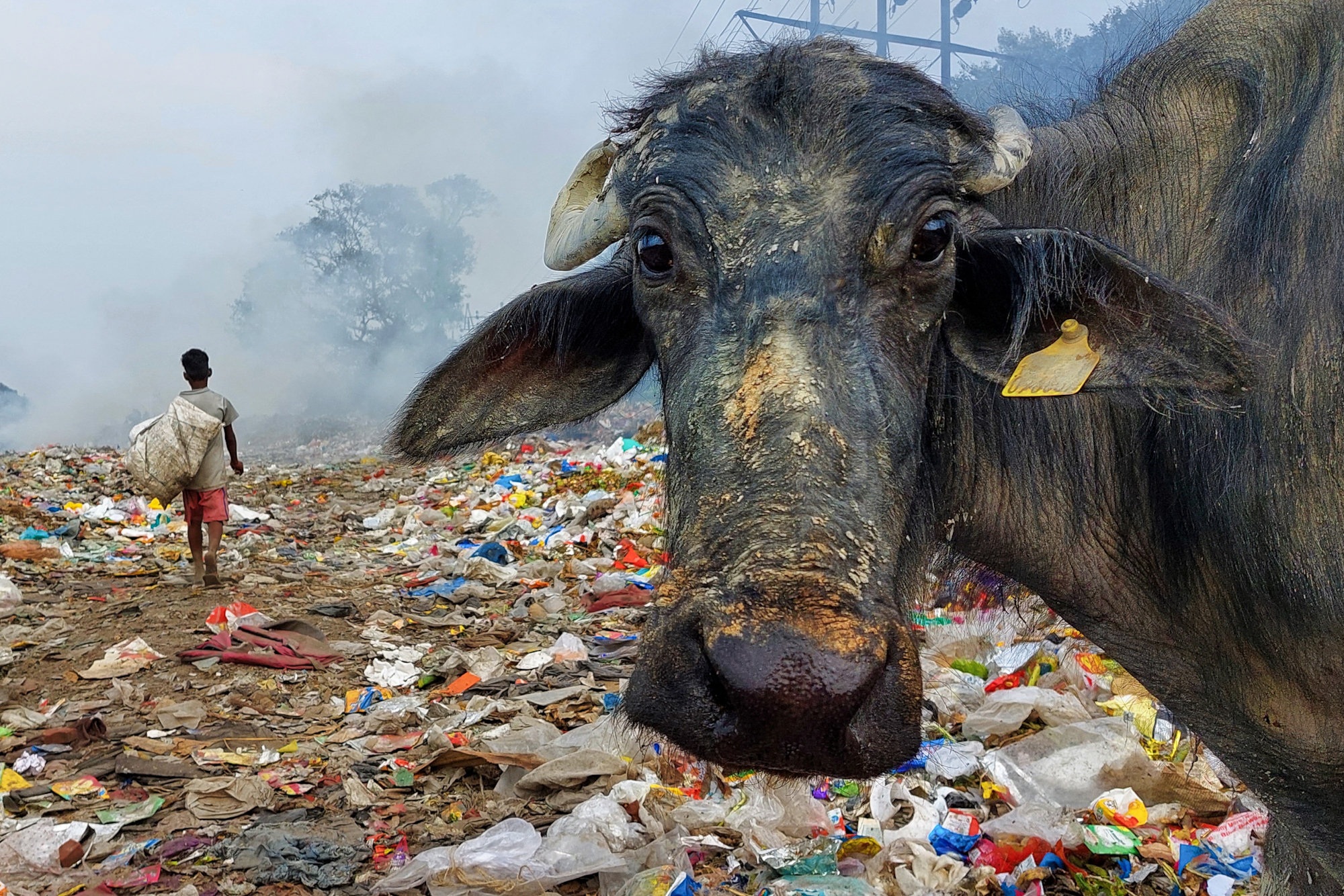
Struggle to survive in the rubbish heap.
Medium/Genre
PhotographyArtist Statement
On the banks of the city’s river lies a sprawling garbage dump, choked with plastic waste and a suffocating stench. Cattle, driven by hunger, forage through the rot, while young boys sift through the filth, collecting plastic to sell. For them, this toxic landscape is both workplace and lifeline—a harsh reality shaped by poverty and survival.
How it fits into contest
Romans 8:22 — “We know that the whole creation has been groaning as in the pains of childbirth right up to the present time.”
This artwork captures creation’s groan in a single, confronting moment. The animal’s gaze meets ours at ground level, surrounded by plastic and smoke, the residue of human excess. Romans 8:22 speaks of a world that suffers not by accident but through broken relationships between humanity and the rest of creation. In the image, that rupture is visible: nourishment has been replaced by waste, pasture by landfill.
The animal is not portrayed as distant nature but as a fellow bearer of suffering. Its closeness to the lens collapses any safe distance, asking the viewer to acknowledge responsibility. The human figure in the background, walking away with a sack, suggests survival within scarcity, another layer of groaning. Both human and animal inhabit the same wounded landscape, reminding us that environmental harm is never isolated; it entangles the vulnerable first.
Yet Paul’s language is not only lament, it is labor. Groaning precedes new birth. By choosing this passage, I wanted the artwork to hold tension between indictment and hope. The discomfort the image evokes is itself a call to repentance and renewal: to reimagine stewardship not as dominance but as care, restraint, and solidarity with all living things.
In this way, the photograph becomes a visual prayer. It asks us to listen to creation’s cry and to participate, however humbly, in its healing so that the groan might one day give way to breath, space, and life restored.
View more art from around the world
Submit Your Artwork Today!
The 2026 Engage Art Contest will be accepting new artwork in January 2026!