Artist bio
Title
The Blue Fig
Medium/Genre
PhotographyArtist Statement
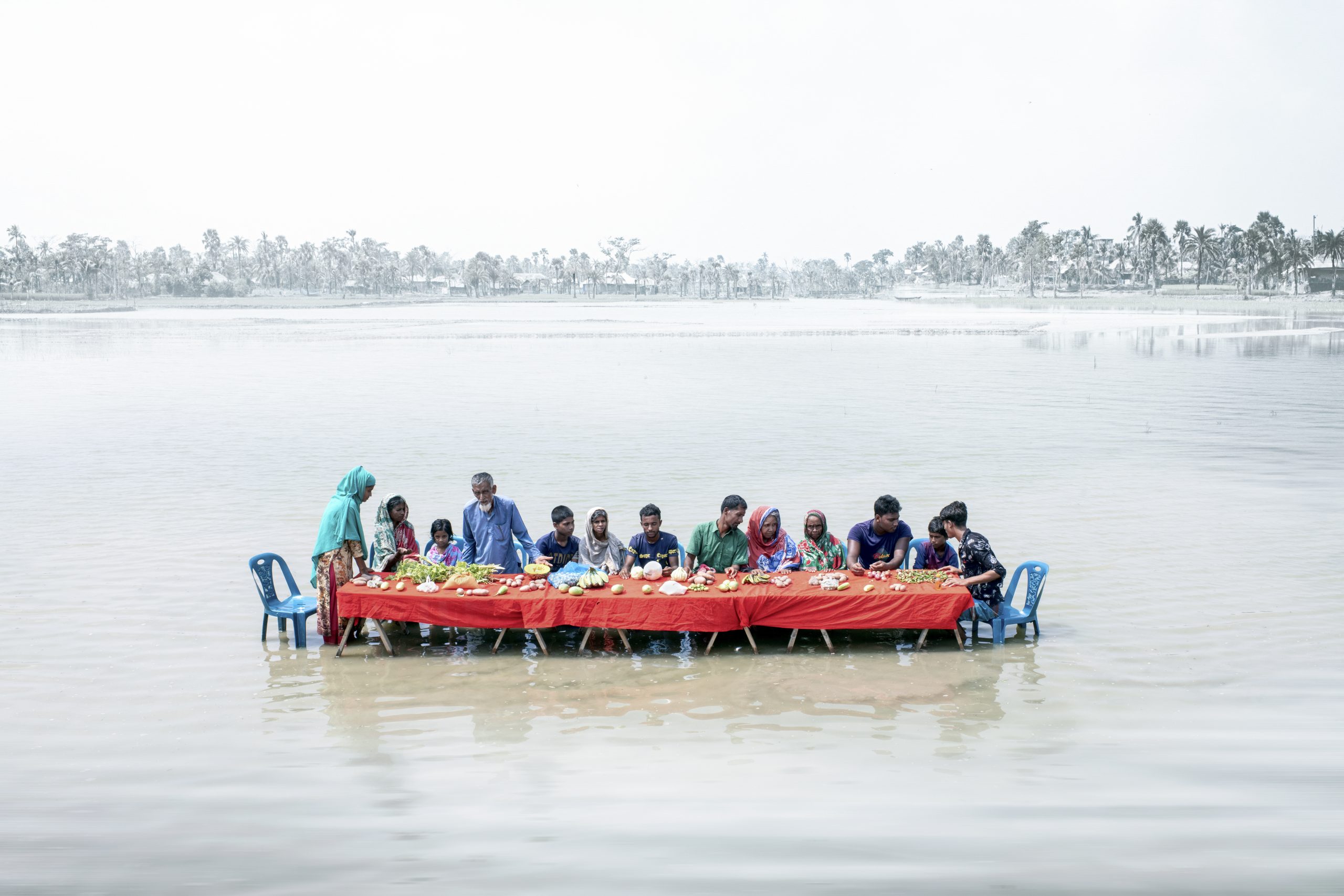
This photograph draws inspiration from The Last Supper by Leonardo da Vinci, recontextualized within a climate-vulnerable landscape in coastal Bangladesh. Instead of a sacred interior, the table is placed in open water. Instead of abundance, it holds scarcity. Four fishermen’s families gather with what remains of their stored food, staging a collective moment of reckoning in the face of environmental collapse.
The participants are residents of an island adjacent to the Sundarbans Forest in Satkhira, Bangladesh. Their lives are shaped by constant uncertainty. River erosion steadily consumes land, cyclones recur almost every year, and forced relocation has become routine rather than exceptional. Climate change has intensified these conditions, while the COVID-19 pandemic further eroded fragile livelihoods and food security.
Bangladesh, the world’s largest delta, stands on the frontline of global warming. Rising sea levels, cyclonic storm surges, and tidal floods increasingly inundate the low-lying coastal belt. During the dry season, reduced upstream freshwater flow allows saline water to penetrate up to 240 kilometers inland, transforming soil composition and rendering traditional agriculture unsustainable. Farmers can no longer grow multiple crops throughout the year, and employment opportunities tied to land and water continue to diminish. Industrial shrimp cultivation accelerates this process by trapping seawater in agricultural fields for extended periods.
One quiet but alarming indicator of this transformation is the proliferation of fig trees, which thrive in saline conditions. Their spread signals not resilience, but ecological imbalance, forewarning the disappearance of species unable to adapt.
By invoking a familiar religious iconography, this work reframes climate change as a shared, ethical crisis. The image asks who bears the cost of a warming world, and who is left to share its last meal.
How it fits into contest
The scriptural reference underlying this work is drawn from the narrative of the Last Supper in the Gospel tradition, particularly Jesus’s final meal shared with his disciples before betrayal, suffering, and death. In Scripture, this moment is marked by intimacy, vulnerability, and ethical urgency. It is not a feast of abundance, but a gathering overshadowed by loss, uncertainty, and an irreversible future. Bread and food are shared not as symbols of prosperity, but as acts of solidarity in a time of imminent crisis.
This photograph echoes that scriptural moment by translating it into a contemporary context shaped by climate injustice. The fishermen’s families gathered at the table are not reenacting a religious scene, but embodying its moral gravity. Like the disciples, they sit together knowing that what sustains them is disappearing. Their remaining food becomes both nourishment and testimony, a quiet acknowledgment of precarity and collective endurance.
Scripture repeatedly emphasizes responsibility toward the vulnerable, the poor, and those living on the margins. The Last Supper anticipates sacrifice borne by one for the sake of many, while also revealing how power structures abandon the most exposed. In this work, climate change functions as a modern form of betrayal, driven largely by forces far removed from those who suffer its consequences. The coastal communities of Bangladesh, who contribute least to global emissions, face the harshest outcomes of rising seas, salinity, and displacement.
By situating the table in floodwater, the image engages Scripture not as distant theology but as lived reality. The act of sharing food amid encroaching water becomes a form of witness, echoing Christ’s call to remembrance and ethical reckoning. The work invites viewers to consider climate change as a spiritual and moral crisis, asking not only what is being lost, but who is responsible, and how humanity chooses to respond before the table is finally empty.
Credits
Mohammad Rakibul Hasan
How to Purchase this Artwork
The artwork is available for purchase at USD 1,200.
This price includes one 20 × 30 inch archival luster paper print, produced using museum-quality, fade-resistant inks to ensure long-term preservation. The print is carefully packaged in a protective roller box and shipped via DHL international courier. All costs, including printing, professional packaging, handling, and worldwide shipping, are fully included in the listed price.
To purchase this work, interested collectors or institutions may contact the artist directly via email to confirm availability and provide shipping details. Upon confirmation, payment instructions will be shared. The artwork will be dispatched promptly after payment is received.
Other Goods & Services Available from this Artist
Not applicable
View more art from around the world
Submit Your Artwork Today!
The 2026 Engage Art Contest will be accepting new artwork in January 2026!