Artist bio
Title
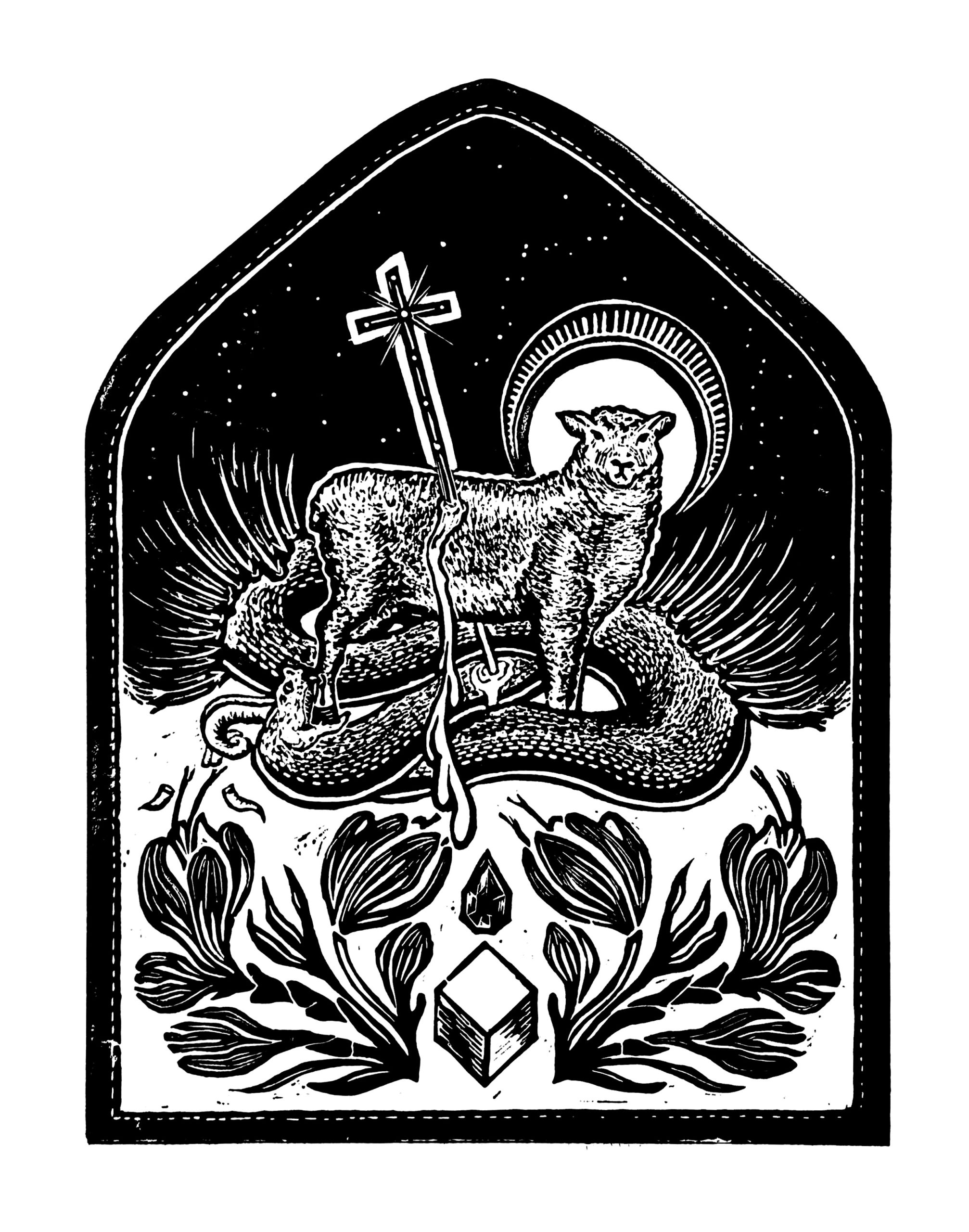
Death was Defeated
Medium/Genre
OtherArtist Statement
In my work, I use simple, recognizable imagery to communicate the truths of Scripture. This approach is rooted in the teaching model of Jesus in the Gospels, where He repeatedly employs familiar images—sheep, seeds, talents—to convey the message of salvation to a lost world. I aim for my work to function in a similar way, inviting viewers into deeper theological understanding through visual clarity and symbolic language.
Over the years, I have intentionally developed a consistent visual iconography that allows me to communicate theological concepts with coherence and precision. For example, when referencing God the Father, I use the image of the burning bush (Exodus 3:2–6). When depicting the global Church, I employ a cube (Revelation 21:15–17) or architectural forms inspired by Gothic church windows. Scripture reveals a God who communicates His will clearly and consistently, and I strive to reflect that same clarity and intentionality in my work.
My creative process begins with meditation on Scripture or engagement with a sermon. From there, I develop preliminary sketches using Procreate on my iPad, refining both form and content until the visual language is clear. Once the concept is established, I consider which medium will best serve the message. My preferred mediums include woodblock printing, ink on paper, and painting on canvas. I am particularly drawn to printmaking and ink work for their bold, graphic qualities and the visual strength of a black-and-white palette.
Ultimately, my goal is to create work that is both theologically grounded and visually accessible—art that communicates enduring truths with clarity, reverence, and intention.
How it fits into contest
The piece Death Was Defeated is inspired by Colossians 2:15: “He disarmed the rulers and authorities and put them to open shame, by triumphing over them in him.” The “He” in this verse refers to Jesus, the Lamb of God, and the rulers and authorities represent the demonic powers of the world. There is profound hope in fully understanding how completely Jesus disarmed sin and the accuser through His sacrifice, I pray this piece is able to encourage that hope.
The focal point of the piece is the Lamb who was “pierced for our transgressions” (Isaiah 53:5). The blood flowing from the Lamb forms a gem that hovers above a cube. The cube represents the Church, while the gem symbolizes the value of Christ’s blood, which is more precious to the Christian than any jewel, for it is by His wounds that “we are healed” (Isaiah 53:5). Surrounding the cube are crocuses. These flowers reference Isaiah 35, which prophesies the coming of Christ: “The desert shall rejoice and blossom like the crocus.”
Piercing the Lamb is a cross constellation in the night sky. This imagery was inspired by Charles Spurgeon, who, while preaching on Colossians 2:15, said, “Faith regards the cross… as the token of glory… the Christian makes a constellation of it, and sees it - in the heaven(s).” Christ’s death on the cross becomes the north star by which the Christian orients his life. The cross not only pierces the Lamb but also delivers the deathblow to the writhing serpent beneath His feet. The serpent’s crown has been shorn; his defeat is certain. He “bruises the heel” of the Lamb, but the Lamb “bruises his head” (Genesis 3:15).
Together, these symbols testify to the finished victory of Christ—death undone and hope secured through the cross.
How to Purchase this Artwork
Framed original woodcut print available for $150. (Shipping Cost not included)
Digital Prints available for purchase through katie@babb-creative.com or inquire on instagram at @babb-creative.
View more art from around the world
Submit Your Artwork Today!
The 2026 Engage Art Contest will be accepting new artwork in January 2026!